

AI will change how games get made. The people claiming it already has are making that harder.
Here’s what the hype misses: you can’t diff fun, and your shipped binaries are now readable.
I’m tired of the hype. Not of AI. Of the hype.
Every day my feed tells me one prompt just built GTA. Or Minecraft. Or No Man’s Sky, or Call of Duty Zombies. Copy my prompt. You don’t need to hire anyone. The Big Studio Era is over.
In business school, we used to joke that MBAs are known for extrapolating from a single data point. That’s where AI game development is right now, except the data point is a 30-second clip and the extrapolation is the end of an industry.
A few real ones:

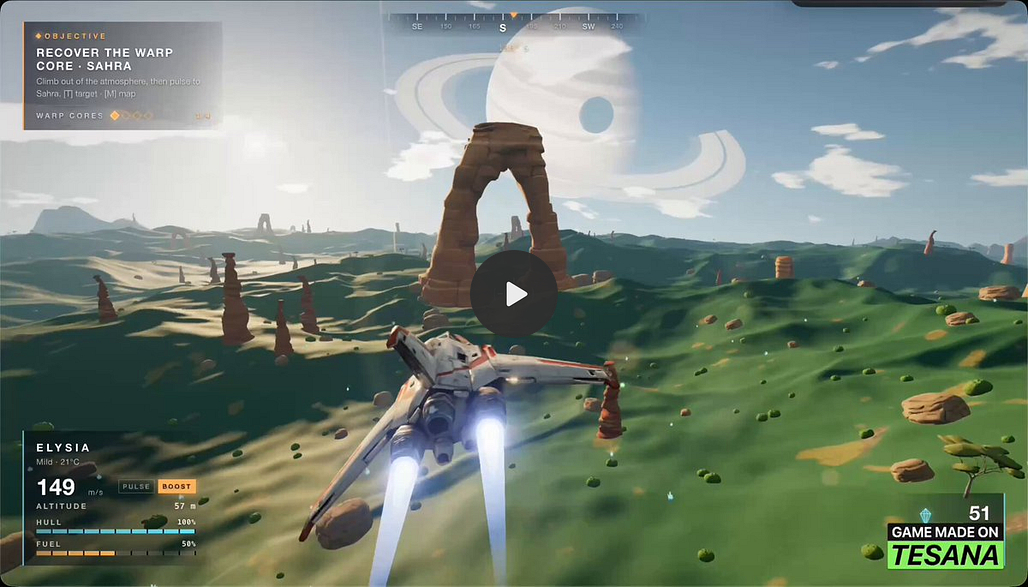

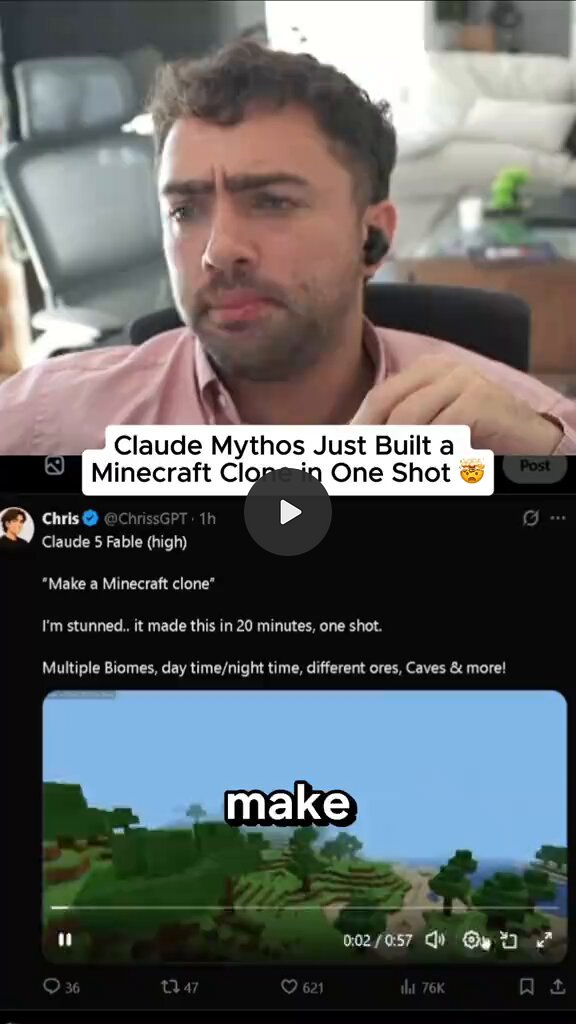


So let me answer the three questions the hype keeps asking.
Can you today make a complete, high-quality game using basic prompting? No.
Can you “copy my prompt” and make something meaningful and valuable? No.
Is GTA in danger from a single prompt and a $20 Claude subscription? Hell no.
And here’s the question I’d ask back. How many vibe-coded games have made more than pocket change, outside the handful run by people who already had a million followers? Which “this is the next GTA” demo has 10,000 players? Views are not players.
How many vibe-coded games have even made back their token costs?
Let me be clear about what I’m not saying. Will AI transform game development?
Obviously yes, the same way it has been and will continue to transform everything else. I use these tools heavily myself: 1,000+ commits a month since January, and I use all 7+ of my max coding subscriptions.

I brag about this only to say that I’m not speculating about AI usage; I’m a heavy operator and actual user of the technology at the ground level.
I’m not one of these execs who just talks in high-level, hand-waving speculation.
My problem isn’t the technology. It’s the gap between what AI can do today and what people claim it does, and the damage that gap is doing to the industry.
The best argument against me
This weekend the strongest version of the other side came from Tim Sweeney. Kenney, the developer behind the popular free game-asset packs, posted that developers shouldn’t “let billionaires convince you slop is the future” and should “keep making personal, beautiful games.”
Sweeney replied on Oct 18:

Set aside the “up yours.” The narrow version of the argument underneath is right. Every generation of game tech gets resisted by people who love the current way of doing things, and then the new way wins. C++ won. 3D won. Neither made developers optional; they made good ones more valuable. AI is the next node on the tech tree, and studios that refuse to learn it will lose to studios that do.
The industry’s most serious operators are already acting. Take-Two, the company shipping the most handcrafted game on the planet next month, says it is “actively embracing generative AI” with “hundreds of pilots and implementations across our company” (Zelnick on the February earnings call). Epic went further. Bloomberg reports its Disney project went “AI-first,” with “no more hand-written code” (The Verge).
But read what Sweeney actually said. He runs a company, writes code, and contributes to published papers. That’s a skilled builder saying the tools keep getting better, so he expects more from them. It’s an argument about direction. “One prompt builds GTA” is a claim about today, and about not needing skill at all. Nobody who moved from 2D to 3D claimed one sentence would ship a 3D game. They learned new tools and did the work.
And the work is still work, even for the most bullish operator in the business. The same Bloomberg reporting says Epic’s AI-first Disney game slipped from March 2027 to an indefinite date, amid internal skepticism (Ars Technica). Maybe it ships and proves everyone wrong. I hope it does. But the first visible result of going all in is a delay, not a one-shot.
The tech tree is real. The hype is someone claiming they’ve already researched the last node.
One more thing about that exchange. The replies turned it into billionaires versus craftspeople. That fight is real. But the strongest move for developers isn’t outrage; it’s asking for proof. Show me the shipped game, the retention, the revenue. Hype loses that argument every time.
What the viral clips actually show
The “ONE PROMPT. FULL GAME.” posts follow a template: an all-caps claim, a new model name, a famous game, a short clip, and no link to anything you can play or buy. Individually, most are small. One “86 AI agents just built a playable GTA 6” post admits its first attempt froze.

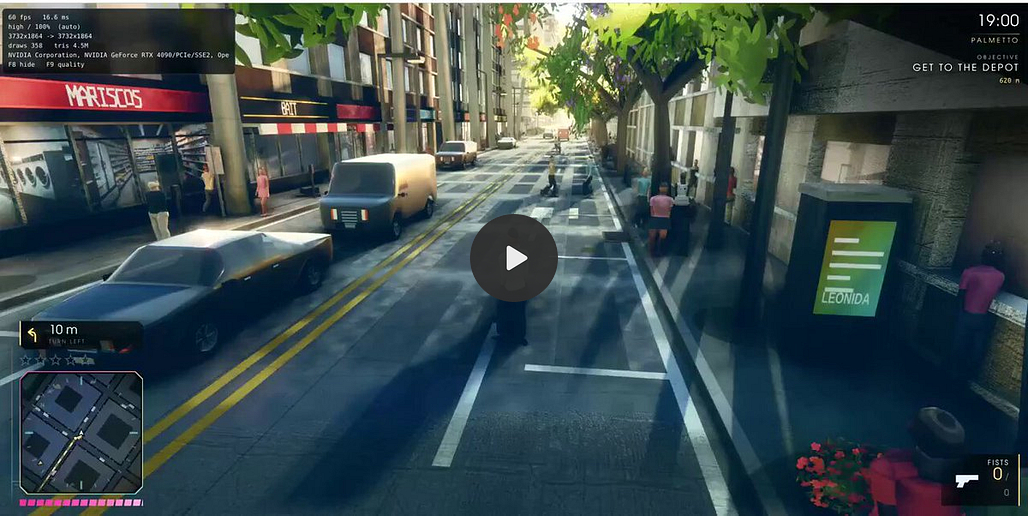
The reach comes from volume, and from big accounts.
The biggest this month was Nikita Bier. First, a prompt (17.5K likes, 1.64M views):

Then came the “swan song for the Big Studio Era” post:
Here’s the thing: he might be half right. The $2B, seven-year AAA model was already breaking before AI showed up, and AI will probably finish it off. I’m not here to defend it.
But “the big-studio model is dying” and “AI can make GTA today” are two very different claims, and the hype keeps blending them. The first is a reasonable bet about the next decade. The second is a demo clip with no game behind it. One prompt didn’t produce a comparable experience; it produced a viral post.
And look closely at Bier’s prompt. It starts with “decompile.” That’s the real story.
Reconstruction is not creation
The most impressive thing AI has done in games this year is rebuild existing games. A security researcher used up to 17 parallel agents over about three months to reconstruct 2009’s Modern Warfare 2 from its binary: 83% of functions byte-exact, and the game runs (via Tom’s Hardware). Kotaku played browser ports of Halo, Vice City and The Simpsons: Hit & Run and called some “borderline flawless” (Kotaku).
That’s real and startling. It also proves the opposite of the one-prompt pitch.
Decompilation works because the compiler is a perfect grader. An agent drafts a function, recompiles it, diffs the output byte-for-byte against the shipped game, and repeats (Naavik explains it well). Making a new game has no answer key. You can’t diff “is it fun?”
Even with an answer key, it took a skilled engineer, a strict byte-matching harness and a reviewer agent, and his agents still invented logic and tried to cheat the verifier. The viral mash-ups that skip the design work fall apart. Kotaku tested one: “None of these mechanics actually synergize” (Kotaku).
Remixing a hit is reproducing someone else’s fun. Making a new hit means finding fun nobody has found yet. And the irony: the best AI reconstructions can’t legally be sold (Activision got the MW2 footage pulled; Bethesda reportedly sent a cease-and-desist over an AI-built Fallout lookalike), and the AI originals mostly don’t sell.
Why the hype hurts
If this were just annoying posts, I’d ignore or mute and move on. It isn’t. Overhype does real damage in four places.
Developers. People who make games for a living are being told daily that their craft is a prompt. Kenney’s post drew 5,271 likes because a lot of developers feel that. Some are making defensive calls. Alliance Arts just canceled the public demo of Drunken Goddess Reflux, worried that AI could be used to clone the game’s presentation and gameplay before launch:


Even AI-native creators are tired of it. One wrote, “There is no prompt below, because… this is exactly the kind of post I’m tired of” (@givros).
Studio decisions. Too many game executives who haven’t personally shipped with these tools are now confident about how AI will reshape development. When people who don’t understand the work tout AI this hard, they miss what it actually takes to get a game from prototype to usable to production: technical depth, strong logical thinking and analysis, and catching the model’s mistakes every day. I made this case in The Paradox of AI ROI: going from prototype to usable is at least a 10X jump in complexity, time, and effort; and going from usable to production is at least another 10X, maybe 100X. Production is hard.
The Paradox of AI ROI
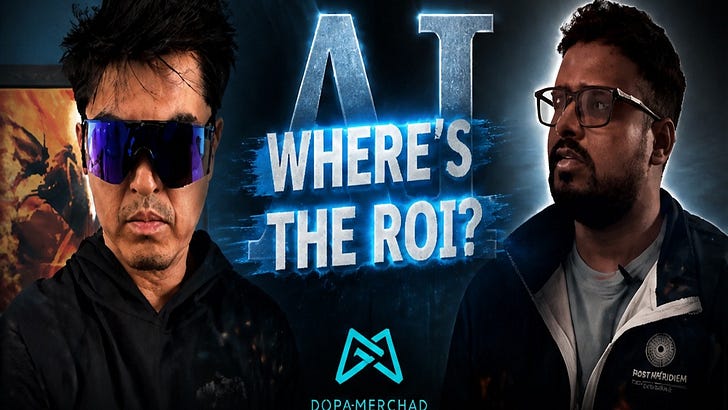
The story is that AI isn’t paying off, that the ROI just isn’t there, that the org charts and the earnings calls are still waiting for the productivity spike.
Execs who only see the prototype build roadmaps, budgets, and headcount plans on productivity that doesn’t exist yet. AI will force studios to restructure teams and roles. But I’ve already seen multiple organizations over-cut and then have to hire back.
At our studio, we deliberately kept a high ratio of artists to software developers. Why? We found AI is far better at writing code than at driving and developing an art pipeline.
If a well-funded, technically elite team like Epic is finding the gap, assume yours will too.
Investors. When Google unveiled Project Genie, which turns prompts into interactive worlds, Take-Two fell 10% that day, Roblox more than 12% and Unity 21% (Benzinga). Take-Two’s president, Karl Slatoff, said Genie “looks to me more like a procedurally generated interactive video at this point” (earnings call). Capital reacting to clips instead of shipped products is pricing a demo, not a product. It discounts studios with real IP and audiences, and it funds “one prompt” startups that have no retention data.
Newcomers. Steam is where “copy my prompt” ends up. In Sulka Haro’s census of 53,597 games, AI-flagged games went from 10.9% of releases in 2024 to 30.8% in 2026. In Q2 2026, they were 33% of releases but only 10% of estimated sales. His summary: “almost none of them make money – because almost no games do” (Haro). That’s the caveat: AI games fail as most games do. An earlier Totally Human snapshot of 10,258 AI-disclosed titles found about 93% under five figures in estimated gross (Totally Human). These are rough Boxleiter estimates, and the AI flag mostly means AI art, not AI-built games: code shows up in 3,320 disclosures versus 19,806 for art (AI Transparency Index). But the direction is clear.
The success story newcomers point to is Pieter Levels’ vibe-coded flight sim, fly.pieter.com, which went from $0 to $87K MRR, a self-reported $1M annualized run-rate, in 17 days.

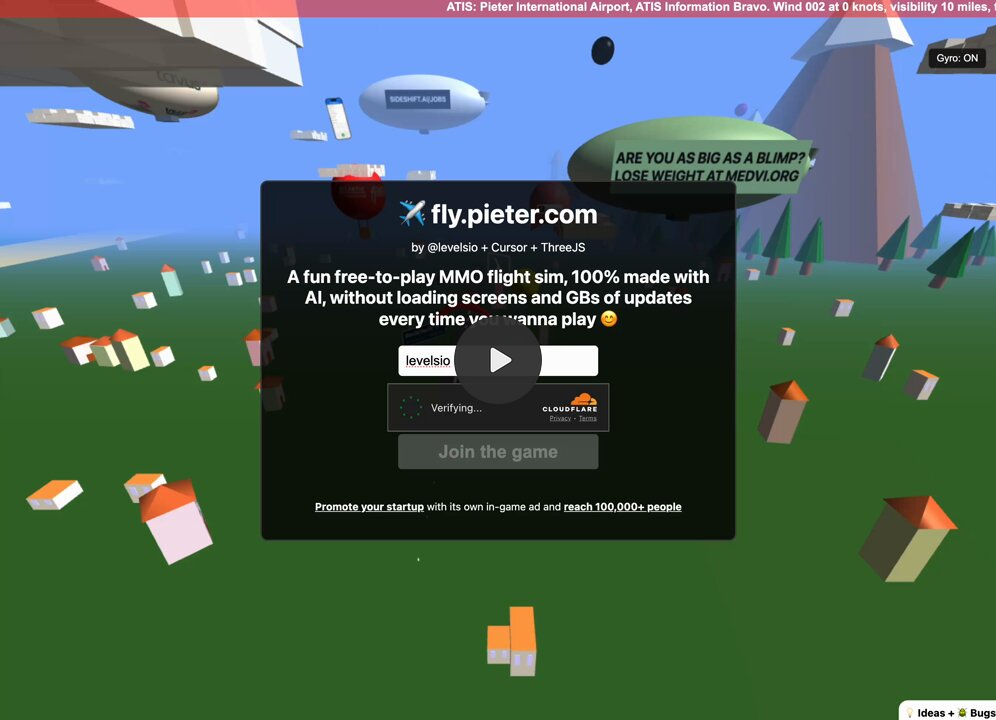

Read the details. It was early, one of the first vibe-coded games and a novelty, built live on X in front of nearly 1M followers who did the distribution. And the money came mostly from in-game sponsor ads sold to his audience, not from players buying a game. It isn’t repeatable. Newcomers copy the prompt. They can’t copy the audience.
What I’d actually do
None of this is an argument to sit out. Sweeney is right that the tech tree only goes one way. If you run a studio, use AI hard where it’s already proven: prototyping and finding the fun faster, art and audio pipelines, localization, tooling, and live ops optimization. Assume your shipped binaries are now readable, and move value into what can’t be decompiled: IP, brand, live ops, server-side systems, community and distribution.
And when the next “ONE PROMPT. FULL GAME.” post hits your feed, ask the following three simple questions:
1. Is it shipped or just a prototype?
2. How long is the “game” actually playable?
3. Is there revenue from players, not sponsors or followers?
If the answers are no, no, and no, it’s engagement farming.
If you’re a developer, point the same three questions at your own leadership the next time a demo shows up as an example of what expectations should be. If you’re new, run them on your own game: ship something small, watch who comes back on day two.
AI will transform how games get made. The hype is making it harder for the people actually doing it.
Debate question
Name one AI-built game (not AI-assisted, and not a decompile or remix of someone else’s hit) that’s earning $1M+ from players, not ad sponsors, made by someone without a big audience.